


Yes, your employer can dispute your WorkCover claim. But an employer objection is not a formal rejection.
Can an employer dispute a WorkCover claim in Victoria? To further answer this question, yes, but only a WorkSafe Insurer decides whether to accept or reject the claim. A self-insurer, on the other hand, makes claim decisions for its own workers.
This article provides general information for injured workers in Victoria. It is not individual legal advice.
Employer objection versus WorkCover claim rejection
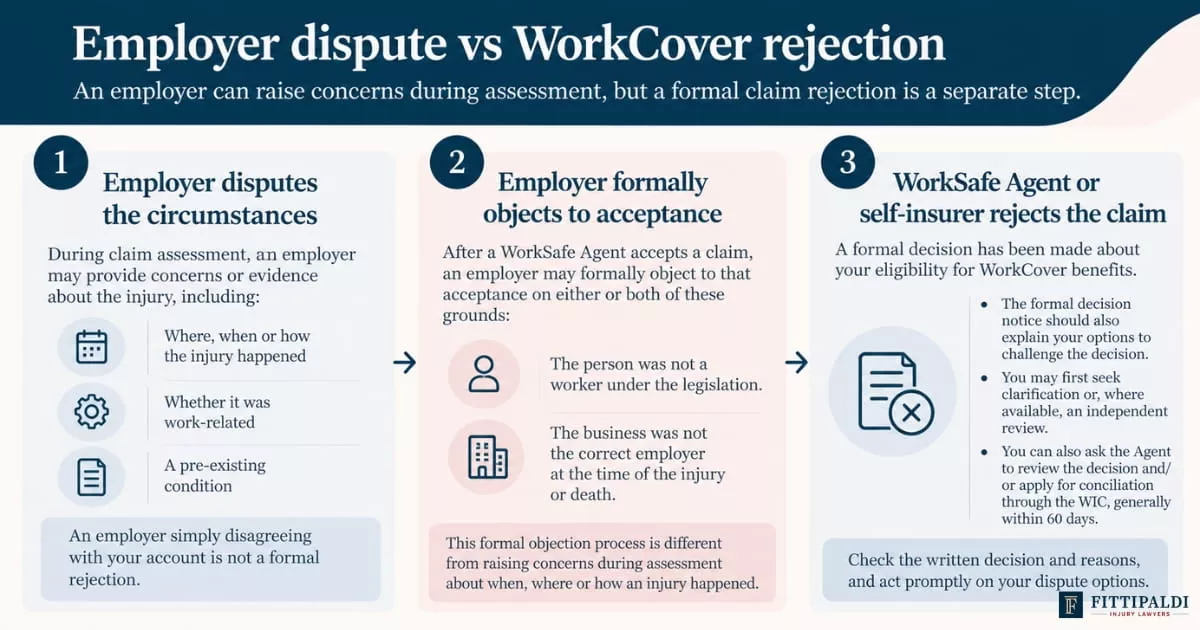
An employer raising concerns during the WorkSafe Insurer’s assessment is different from a formal claim rejection. Employers provide information about an injury, but do not participate in the decision of whether the claim should be accepted or rejected.
What an employer may dispute during claim assessment
During WorkSafe Insurer’s assessment of the claim, an employer may dispute where, when or how an injury happened, or whether it was work-related. They may also raise questions about a pre-existing condition, but they do not have the power to make a decision to reject or accept the claim.
During assessment, employers can provide records such as incident reports, rostering data, workplace communications and witness details in support of their objections. This helps the Insurer weigh the circumstances against the worker’s account, as outlined in WorkSafe Victoria’s guidance on employer injury claim reports.
If an employer doesn’t provide or complete requested paperwork, it can complicate fact-finding, but it doesn’t by itself determine the worker’s entitlement to compensation.
Physical and Psychological Injury Claims
Disputes can arise in both physical injury and psychological injury claims, including claims connected to traumatic workplace events. The evidence needed will depend on the circumstances of the injury, the reported condition and the questions raised during the assessment.
Evidence That Can Help Clarify What Happened
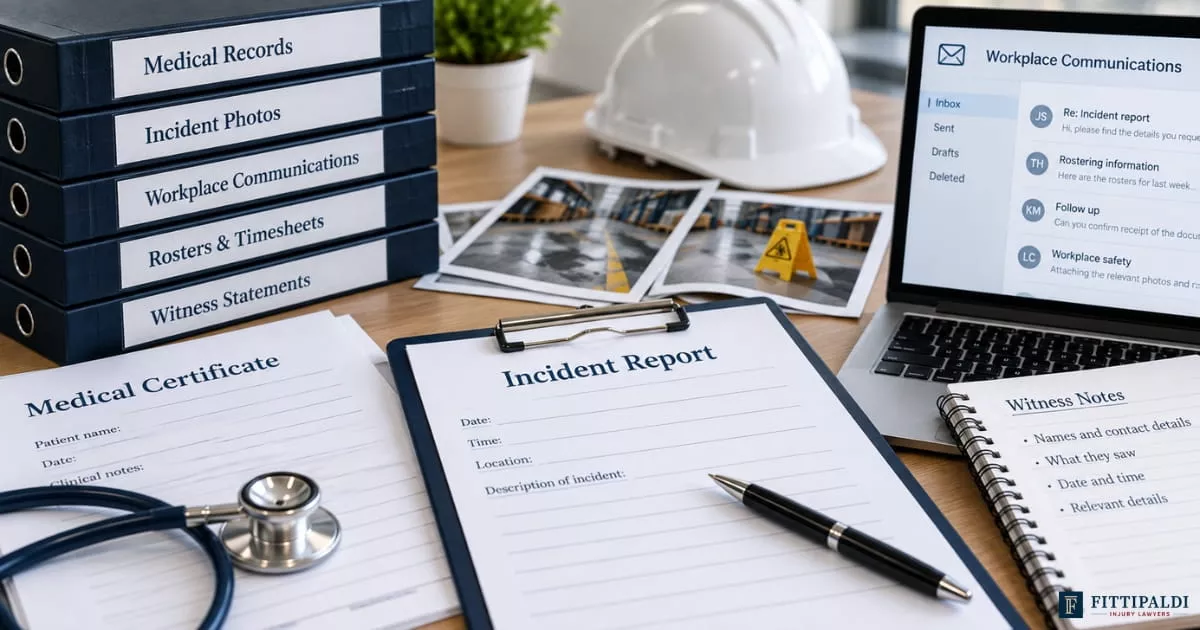
The following evidence can help support a WorkCover claim when facts are disputed:
- A medical certificate, clinical notes and other medical evidence
- Incident reports and photographs
- Emails, text messages and workplace communications
- Rosters, timesheets and duty records
- Witness statements, names and contact details
- Diary notes made close to the event
Keep copies of documents and communications you submit, and provide accurate information throughout the WorkCover claim assessment process. Evidence can support your account, but no single document guarantees a particular outcome.
If the Employer Will Not Complete or Support Paperwork
You may be able to lodge the claim directly with WorkSafe or the relevant WorkSafe Agent in certain circumstances, if your employer refuses to accept your WorkCover claim or fails to forward it within the required timeframe.
Keep a copy of your claim form, medical certificates and any other documents you submit. Record when you gave the claim to your employer, who you spoke with and any requests you made for the claim to be forwarded. For basic submission steps, see this guide on how to lodge a WorkCover claim.
What Happens After a Formal WorkCover Rejection
If a WorkCover claim is formally rejected, you may first seek clarification or, where available, an independent review. WorkSafe Victoria has current guidance on getting help with a WorkCover claim decision.
You can also ask the Agent to review the decision and/or apply for conciliation through the Workplace Injury Commission (WIC), generally within 60 days. Late applications may sometimes be considered, so check current WIC requirements before relying on this timeframe.
An independent review may also be available if a dispute remains unresolved after conciliation, depending on the type of decision.
If the decision affects your weekly payments, medical treatment or other entitlements, get independent advice promptly to understand your options and deadlines.
Conciliation and Further Dispute Resolution
Conciliation is a dispute resolution process handled through the Workplace Injury Commission (WIC) that can help resolve a WorkCover disagreement without immediately going to court.
Not every dispute follows the same pathway. Depending on the type of claim decision and the circumstances, further review or dispute resolution options may be available if the matter is not resolved through conciliation. The Workplace Injury Commission explains the current process, eligibility and time requirements on its conciliation information page.
WorkCover Eligibility Is Different From Proving Employer Negligence
A WorkCover claim is about whether an injury meets the requirements for workers’ compensation under Victoria’s workers compensation scheme, not about proving the employer was negligent or at fault.
An employer objection to responsibility for an injury doesn’t, by itself, determine a worker’s entitlement to compensation. The relevant WorkSafe Insurer or self-insurer assesses the claim and makes the eligibility decision based on the applicable requirements and available information.
Where Melbourne Workers Can Get Clear Guidance
Workers across West Melbourne, the Melbourne CBD, Footscray, Sunshine, Dandenong and surrounding areas can face the same WorkCover process.
Fittipaldi Injury Lawyers’ principal, Gennaro Fittipaldi, has experience defending claims for WorkSafe Victoria and insurers, offering practical insight into how disputed evidence may be assessed.
Anyone considering representation following an employer challenge or formal rejection can review when to speak with a WorkCover lawyer.
The appropriate next step will depend on the written decision and individual circumstances.
Frequently Asked Questions
Can an Employer Dispute a WorkCover Claim in Victoria?
Yes. An employer can raise concerns or provide information disputing the circumstances of a workplace injury, but the formal claim decision is generally made by the relevant WorkSafe Insurer or by a self-insurer for its own workers. An employer’s objection does not automatically mean the WorkCover claim will be rejected.
How Can I Appeal a WorkCover Decision in Victoria?
If you disagree with a WorkCover claim decision, you may be able to request a review from the relevant WorkSafe Insurer or self-insurer, or apply for conciliation through the Workplace Injury Commission (WIC). Time limits apply, so check the current WIC conciliation requirements promptly to avoid missing your window.
What Should I Do if My WorkCover Claim Is Rejected in Victoria?
Keep a copy of the decision notice, reasons and any supporting documents. If the rejection affects your weekly payments, medical expenses or other entitlements, consider getting independent legal advice promptly to understand your next steps.
Key Takeaway
An employer can raise concerns about a WorkCover claim, but the relevant WorkSafe Insurer or self-insurer generally makes the claim decision. If your employer challenges your claim, keep relevant records, read formal notices carefully and note any applicable time limits.