


Not every workplace injury happens in an instant. Some develop slowly over weeks or months. Others seem minor at first, then get worse.
Many injured workers put off lodging a claim. Some hoped the pain would pass. Others were unsure if their injury was serious enough or were discouraged by their employer.
If you’re worried it might be too late, get advice before assuming the worst. Acting early gives you the best chance of protecting your rights.
Is There a Time Limit to Lodge a WorkCover Claim?
Yes, there are time limits. In Victoria, you must notify your employer within 30 days of a workplace injury. After that, you submit a WorkCover claim form to your employer to begin the formal process.
But time limits aren’t always straightforward. The clock doesn’t always start on the day of the accident. For injuries that develop over time, or conditions you didn’t immediately connect to your job, the starting point can differ.
WorkSafe Victoria administers the scheme under the WIRC Act. Whether you work for a standard employer or a self-insurer, the same general obligations apply.
Missing the 30-day notification window doesn’t automatically mean your claim is finished.
Claims might still be accepted after the reporting period, depending on the circumstances. A special excuse may allow time limit extensions for late claims.
If you’re unsure where you stand, speak with a personal injury lawyer in Melbourne before drawing any conclusions. Every situation is different, and early advice can make a real difference.
Why You Shouldn’t Delay Lodging a WorkCover Claim
The sooner you act, the stronger your claim is likely to be. Delays can create complications that are hard to undo.
Acting early matters because:
- Medical records are more accurate close to the injury date.
- Employer recollections are fresher and easier to verify.
- Evidence is simpler to gather before documents go missing.
- Witnesses remember details more clearly.
There are practical reasons too. Earlier lodgement means earlier access to support, including medical expenses and weekly payments, which are based on pre-injury average weekly earnings, while you recover. It is best practice to lodge your claim form as soon as possible after notification.
Understanding your workers’ compensation payouts from the start helps you make better decisions. If you’re unsure where to begin, speaking with a lawyer early can help you avoid costly mistakes.
When Does the Time Limit Usually Start?
The answer depends on your situation. For a sudden workplace injury, the clock generally starts on the injury date. But not every claim starts that way.
Some injuries develop gradually. Repetitive strain injuries, for example, may build over months or years. In those cases, the starting point may be less clear.
The same applies to psychological injury. If you experienced a traumatic event at work, the date you became aware your condition was work-related may be relevant. That’s not always the same as the date of the event itself.
Many workers are surprised to learn their initial injury was more serious than they initially thought. Common workplace injuries range from physical trauma to conditions that worsen quietly over time.
When your injury developed gradually, it’s worth getting advice on where your time limit actually starts before assuming you’ve missed it.
What Happens If You Miss the WorkCover Deadline?

Missing a time limit doesn’t automatically end your claim. Every situation is different, and the impact of a delay depends on your specific circumstances.
That said, missing a deadline can affect your options. Some entitlements may become harder to access. Others may require additional steps to pursue.
You can still pursue a claim after missing the 30-day deadline in certain circumstances. A special excuse may allow time limit extensions for late claims. This could include situations where you didn’t realise your injury was work-related, or where you faced circumstances beyond your control.
If your claim is accepted, you may be entitled to weekly payments, medical costs, and, in some cases, lump-sum compensation for permanent impairment. If your claim is rejected, there are also time limits for challenging that decision.
You can appeal adverse decisions within 60 days of notification through the independent review service or the Workplace Injury Commission.
Don’t assume you have no options. Speaking with a personal injury lawyer as soon as possible can help clarify where you stand before any further time passes.
Common Reasons People Delay a WorkCover Claim
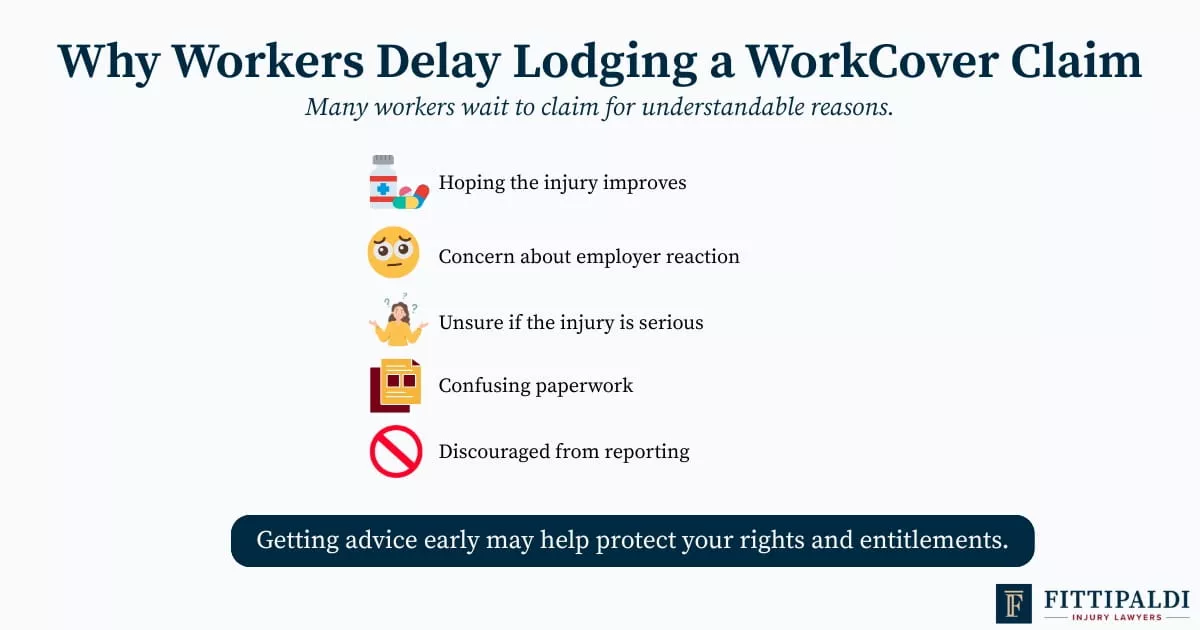
Common reasons include:
- Hoping the injury would improve on its own
- Fear of how their employer might react
- Not realising the injury was serious enough to claim
- Not knowing they had the right to make a claim
- Finding the paperwork overwhelming or confusing
- Being discouraged by someone at work from reporting it
If any of these sound familiar, you’re not alone. Many workers across Victoria have been in the same position.
The important thing is what you do next. Getting advice sooner rather than later gives you the best chance of understanding your options.
How to Lodge a WorkCover Claim: A Brief Overview
The process doesn’t have to be complicated. Here’s a simple overview of the key steps.

Get medical treatment

Report the injury

Obtain a Certificate of Capacity

Complete a Worker's Injury Claim Form
Submit this to your employer to begin the formal claim

Employer forwards your claim

Insurer assessment
When Should You Speak With a WorkCover Lawyer?
You don’t need to wait until your claim is in trouble to get legal advice. Speaking with a workers’ compensation lawyer early can help you understand your position from the start.
Consider getting advice if:
- You’re unsure whether your injury falls within the time limits
- Your employer disputes your claim or discourages you from lodging
- Your insurer is delaying a decision or hasn’t responded
- Your claim has been rejected, and you want to understand your options
- You’ve suffered a serious injury and want to know your full entitlements
- You’re unsure whether you’re still eligible to claim
Your claim includes potential entitlements to medical expenses, reasonable costs of treatment, and lump-sum payments for permanent impairment. Claims for treatment expenses must be submitted within 6 months.
In serious cases, common law claims may also be available where employer negligence contributed to the injury. A permanent impairment benefit is a one-time lump-sum payout assessed against your level of impairment.
Many workers don’t realise how many workplace injuries qualify for compensation. Getting advice costs nothing upfront at Fittipaldi Injury Lawyers. You deal directly with your lawyer from the first conversation.
Worried You’ve Waited Too Long?
If you’re unsure whether you can still lodge a WorkCover claim, getting advice early can help you understand your options. Every situation is different, and a conversation costs nothing.
Fittipaldi Injury Lawyers provides clear, honest guidance tailored to your circumstances. If you’re dealing with workcover issues, you’ll have direct access to your lawyer throughout your matter. No win, no fee, with disbursements covered upfront.
Frequently Asked Questions
How long do I have to report a workplace injury?
Can I claim if my injury developed over time?
Yes, you can still claim if your injury developed gradually. Repetitive strain injuries and conditions that worsen over time can qualify, with time limits starting from when you became aware the condition was work-related.
What if my employer never reported the injury?
Can I still claim if I've changed jobs?
What documents should I keep?
Do I need a lawyer before lodging a claim?
You don’t need a lawyer to lodge a claim, but early advice can help protect your rights. If your matter involves public liability or a serious injury, speaking with a lawyer before lodging is worth considering.