


In 2026, Melbourne’s compensation system operates under strict limits that rarely match actual costs. Weekly payments stop at $2,800, pain and suffering is capped at $680,160, and only 5-8% of WorkCover claims ever reach common law.
Navigating a claim, as we move through 2026, often feels like trying to live a Southbank life on a Footscray budget. The numbers don’t stretch far enough.
For high earners and people with severe injuries, the gap between actual loss and legal limits keeps growing. “Full recovery” under Victorian law often ends well before real financial recovery begins.
From the $2,800 weekly cap to the $2.5 million average cost of catastrophic freeway injuries, these 16 statistics set the rigid boundaries of what an injury claim is worth in Melbourne today.
Why This Matters
For many Melburnians, this creates a hard truth. If you’re injured, the system often covers only part of your real costs. Weekly payments stop at fixed limits, while rent, mortgages, and bills keep climbing. With housing taking up close to half of average take-home pay, even short gaps hurt.
These figures show where support runs out. They explain why many people struggle despite being “covered.” This guide sets out the limits across:
- WorkCover
- The TAC
- Public Liability
This way, you can see where compensation ends (and where personal risk begins).
Key Statistics at a Glance
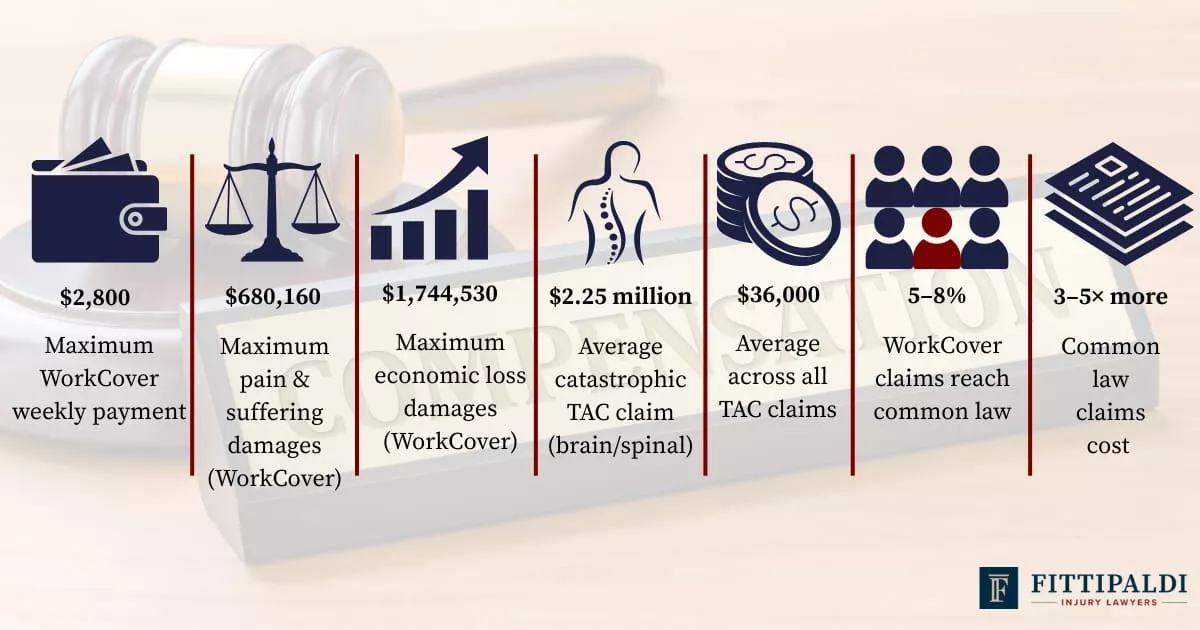
- Maximum WorkCover weekly payment: $2,800
- Maximum pain & suffering damages (WorkCover): $680,160
- Maximum economic loss damages (WorkCover): $1,744,530
- Average catastrophic TAC claim (brain/spinal): $2.25 million
- Average across all TAC claims: $36,000
- Only 5-8% of WorkCover claims reach the common law threshold
- Common law claims cost 3-5x more than statutory claims
WorkCover: The Daily Grind & The Safety Net
Statistic #1: The maximum weekly workers’ compensation payment in Victoria is $2,800.
Note: This is an indexed cap, scheme-year-dependent, meaning exact amounts vary by financial year and worker status.
Under WorkCover, this is the upper limit on weekly income replacement. It applies to eligible workers, not lump-sum compensation.
Weekly payments are capped, even for high earners. Above the cap, income loss is not covered by the scheme.
Statistic #2: Indexed from 1 July 2024, the maximum pain and suffering damages for serious damages under Victorian WorkCover is $680,160.
As of July 1, 2025, this is the statutory cap, and it applies only after a serious injury threshold is met. In simple terms, even severe injuries face a hard upper limit.
Beyond this amount, awards are not available under the scheme.
Source: Transport Accident Commission (TAC), CL Facts
Statistic #3: $1,744,530 is the maximum economic loss damages for the years 2025-2026.
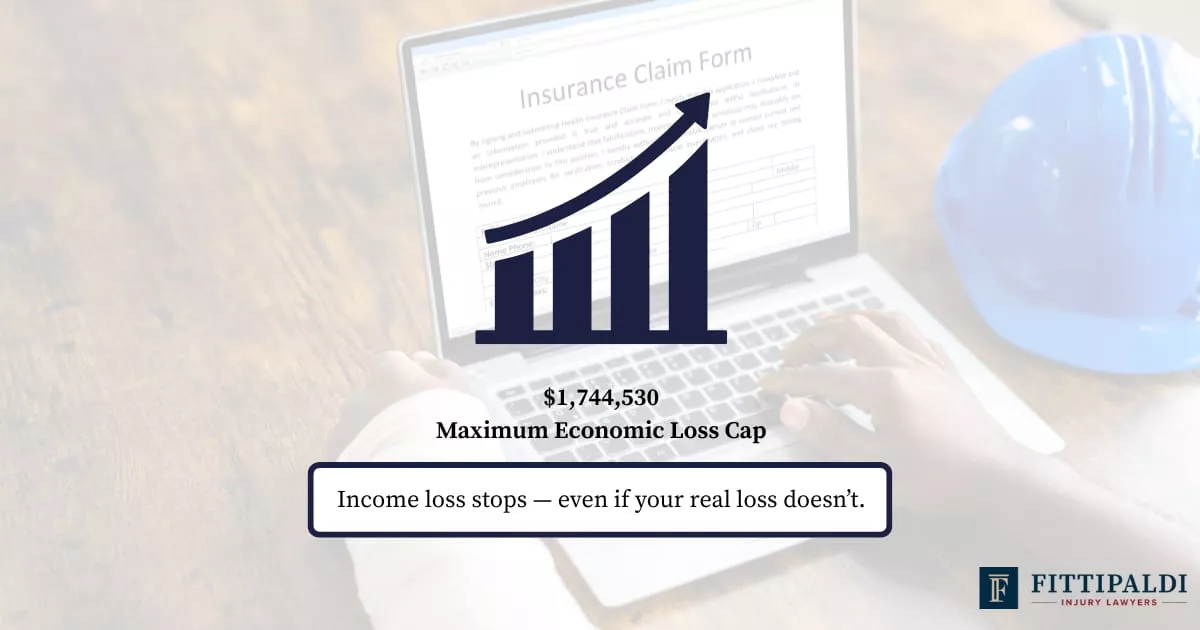
There is a hard ceiling on income loss compensation, even for permanent disability. High earners often recover less than their actual lifetime loss.
It should be noted that this cap is indexed annually and applied only once a serious injury threshold is met.
Source: WorkSafe Victoria, Claims Manual, Maximum payments – actions for damages
Statistic #4: A worker must show at least 30% Whole Person Impairment (WPI) to qualify.
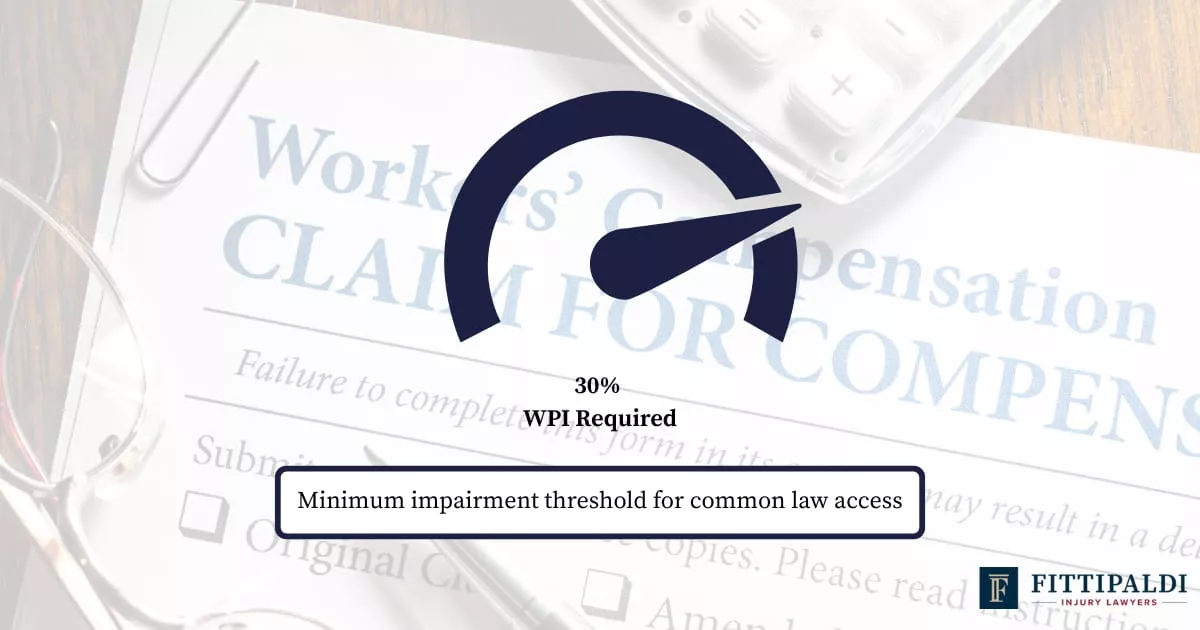
This serious injury threshold controls access to common law damages for pain and suffering and economic loss.
The reality: most injured workers never reach the impairment threshold; only a small share of claims progress to capped lump-sum damages.
WPI is only one pathway. Workers below 30% may still be eligible under the narrative test.
Source: Safe Work Australia, Common law provisions
Statistic #5: The maximum statutory benefit per individual claim is $501,200.
Source: WorkSafe Victoria, WorkCover insurance, Industry rates and key dates
For context, a worker on the maximum weekly payment of $2,800 would reach the statutory cap after about 179 weeks, or 3.5 years. Serious injuries often last far longer. Once the cap is reached, payments stop.
At that point, workers must return to work or seek common law damages if they meet the serious injury threshold.
TAC: The Commuter’s Reality
Statistic #6: $680,160 is the maximum pain and suffering damages under TAC Common Law, as indexed from 1 July 2025.
This is a pain-and-suffering cap, not a total TAC limit claim.
Source: TAC, Common law compensation, FAQs
Statistic #7: The maximum pecuniary (economic) loss damages reach $1,530,470.
Source: Same as above
Statistic #8: The maximum lump-sum impairment benefit is up to $411,470 (11%+WPI), indexed.
Source: TAC, Impairment benefits
Statistic #9: At least $67,980 in assessed loss is required to pursue a TAC common law claim.
Minor or moderate injuries are filtered out of the common law system. Only claims that exceed this loss can proceed.
Source: TAC, Common law compensation, FAQs
Public Liability: Out & About in Melbourne
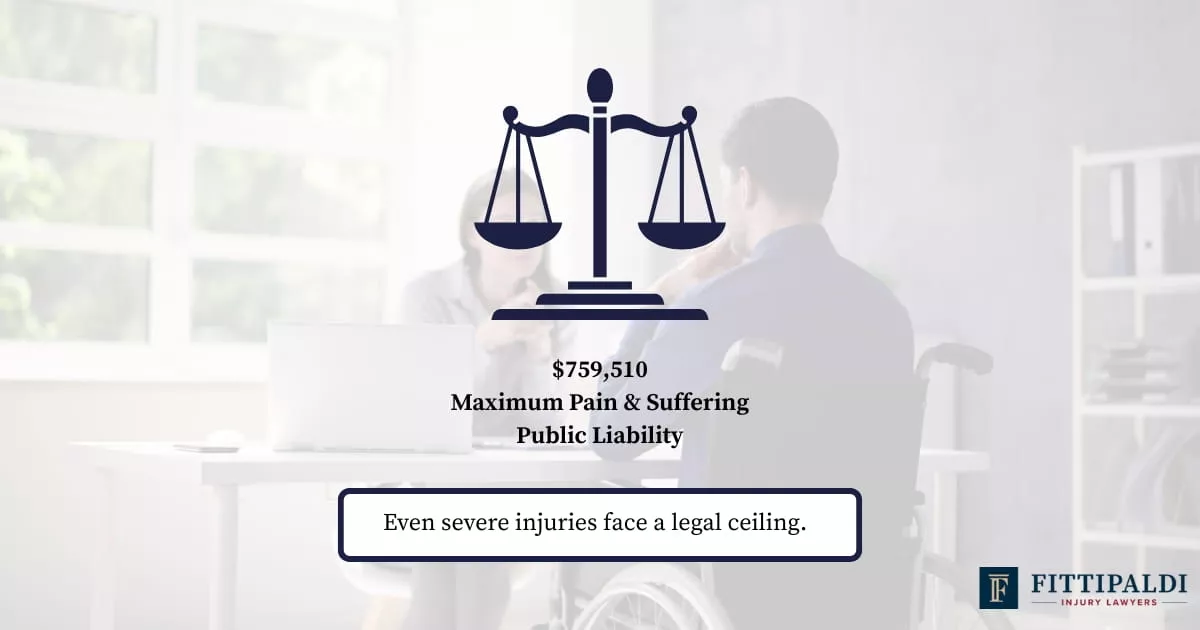
Statistic #10: Indexed from July 1, 2025, $759,510 is the maximum pain and suffering damages in Victorian public liability claims.
Source: WorkSafe Victoria, Claims Manual, Maximum payments – actions for damages
Statistic #11: The statutory weekly cap on economic loss in public liability claims is $4,200.03, indexed.
Under the Wrongs Act 1958 (Vic) – Section 28F, weekly economic loss is capped at three times the average weekly earnings at the time of judgment.
For high-income earners injured in public liability cases, this often leaves a large gap between real income loss and what the law allows them to recover.
Statistic #12: Significant injury impairment thresholds for personal injury: Psychiatric injury (10%+WPI); Spinal injury (5%+WPI); Other personal injuries (more than 5% WPI).
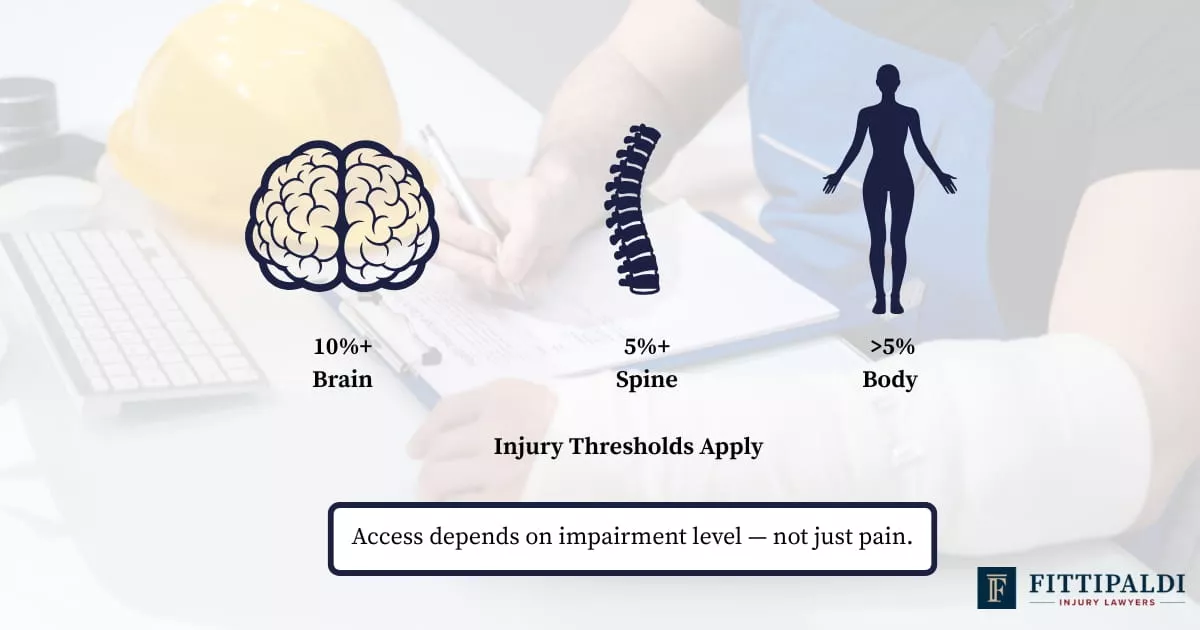
Only injuries meeting defined impairment levels can proceed to damages. Many claims fall short despite ongoing injury.
(Note: WPI is assessed under approved medical guides.)
Source: Justice Victoria – Compensation for personal injury
The Reality Check: Trends and Truths
Statistic #13: On average, about $2.25 million per claim for severe brain or spinal cord injuries.
Source: TAC – What we do
Statistic #14: About $36,000 per claim, on average, across all TAC claims.
Source: Same as above
Statistic #15: Claims pursuing common law damages typically cost 3-5 times more than statutory-only claims.
This is a reported cost range, not a fixed ratio; actual multiples vary by the severity of the injury and the length of litigation.
Source: Judicial College of Victoria, Serious Injury Manual
Statistic #16: Only about 5-8% of WorkCover claims meet the serious injury threshold required to pursue common law damages.
Note: This estimate is based on WorkSafe Victoria data comparing common law claims to total accepted claims. While not published as a single headline figure, the 5-8% range has remained consistent across reports from 2020 to 2025.
Source: WorkSafe Victoria, Common law claim for damages
Where These Numbers Come From
Every figure in this guide comes from primary Victorian sources. Each stat was checked against 2025-2026 indexation notices and statutory reports.
- WorkSafe Victoria (WorkCover)
Weekly payments, economic loss caps, and serious injury thresholds come from the Workplace Injury Rehabilitation and Compensation Act 2013 and the Victorian Government Gazette (No. S 275, June 2025). - Transport Accident Commission (TAC)
Road injury payouts and common law thresholds are taken from the TAC’s indexed benefits schedules and official scheme reporting for 2025-26. - Public Liability Claims
Caps for pain and suffering and limits on economic loss are set under the Wrongs Act 1958 (Vic) and the Wrongs (Part VBA Claims) Regulations 2025, published by Justice Victoria. - Industry-wide Context
Long-term claim trends and success rates draw on data from SafeWork Australia and the Judicial College of Victoria.
Methodology & Notes
To reiterate, every statistic in this guide reflects the latest indexed limits for 2025-2026. Each figure was checked multiple times against official sources.
1. How indexation was applied
- Average Weekly Earnings (AWE)
Used for income replacement caps under WorkCover and the TAC. Figures come from the Australian Bureau of Statistics Victorian earnings data. - Consumer Price Index (CPI)
Used for lump sums, such as pain and suffering and impairment benefits. These are tied to Melbourne CPI, not national inflation.
2. Statutory cross-checking
Every 2026 maximum was checked against the Victorian Government Gazette. This is the legal record for indexed amounts and rule changes.
Important distinction: Caps move with inflation, thresholds don’t.
3. How averages were calculated
For catastrophic injuries, averages include:
- Lump-sum payments
- Ongoing treatment
- Lifetime care and support costs
They are total claim costs, not cash paid upfront.
Technical notes
The cap usually depends on when the injury occurred, not when the claim is filed. Earlier injuries may sit under lower limits.
Narrative test
If WPI thresholds aren’t met, some claims rely on a narrative test. This assesses real-world impact on work and daily life. A surgeon losing fine motor control may qualify despite a lower WPI.
Rounding
All figures are rounded to the nearest $10. This follows the indexation practice of WorkSafe Victoria.
2026 Compensation Landscape: Key Takeaways
After an injury in Melbourne, the key issue is simple. Know where support stops.
- Payment caps hit higher earners first.
Weekly payments stop at $2,800 under WorkCover and $4,200 in public liability claims. For many full-time workers, this falls well short of normal take-home pay. - The serious injury test controls access.
Lump-sum payments for pain and suffering are subject to strict thresholds. Most claims never reach the 30% WPI mark or pass the narrative test. - Common law pays more, but takes longer
Claims that reach common law often cost 3-5 times more than statutory claims. They also carry legal risk and can run for years. - Indexation lifts caps, not outcomes
Annual increases track inflation, not personal loss. Even the most severe cases cannot exceed these fixed limits.
Citation & Annual Updates
This page is reviewed annually in July to reflect indexed compensation limits and the latest publicly available compensation data in Victoria.
Legal Disclaimer
This guide provides factual information about Victorian compensation limits and is intended for educational and research purposes. It does not constitute legal advice.
Every injury claim is different. Factors including injury severity, income level, and individual circumstances significantly affect claim outcomes and eligibility.
If you’ve been injured and need guidance specific to your situation, speak with a workcover lawyer who can assess your claim and explain your options.