

Drive down any Melbourne street today and you’ll notice something: there are more cars, more bikes, more pedestrians than ever before. Unfortunately, our roads are getting deadlier too.
Last year, 282 people didn’t make it home in Victoria – that’s nearly six families shattered every single week.
What’s particularly sobering about these numbers is that most weren’t caused by drunk hoons doing 150km/h down Chapel Street. Over half involved everyday stuff – someone checking their phone at a red light, going 65 in a 60 zone, or simply not seeing that pedestrian.
We’ve spent months reviewing Transport Accident Commission reports, Victoria Police data, and federal road safety databases to compile the most comprehensive picture of Melbourne’s road reality available anywhere. These 47 statistics tell the story of where, when and why crashes happen in our city.
Top 10 Must-Know Stats
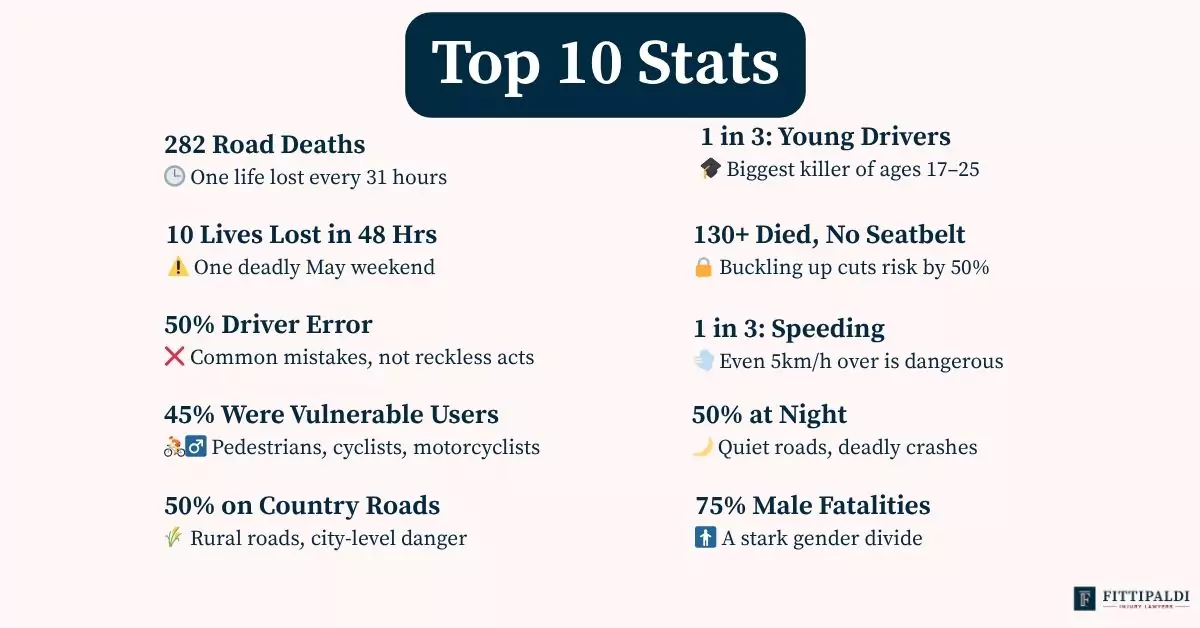
- Victoria recorded 282 road deaths in 2024 – nearly one life lost every 31 hours.
- Ten fatalities occurred over just one weekend in May 2025 – a horrific 48-hour cluster that shocked emergency services.
- More than 50% of fatal crashes involved common driving errors, not the extreme behaviour you might expect.
- 45% of fatalities involved vulnerable road users (pedestrians, cyclists, motorcyclists).
- Country roads account for over half of Victoria’s road deaths despite having way less traffic than the city.
- One-third of fatalities involve young drivers aged 17–25. Crashes remain the number one killer of young Australians.
- Over 130 deaths in five years were due to not wearing seatbelts – buckling up cuts your death risk in half.
- Speeding contributes to roughly one-third of fatal crashes – even 5km/h over the limit doubles your crash risk.
- Half of all fatal crashes happen at night, despite roads being much quieter after dark.
- Male drivers account for around 75% of road fatalities – a massive gender gap that’s hard to ignore.
General Crash Stats Across Melbourne
What strikes us about these figures is how they’ve shifted. Twenty years ago, most road deaths happened inside cars. Now, nearly half involve people outside of vehicles – pedestrians crossing Sydney Road, cyclists heading to work, and motorcyclists on weekend rides.
- Fatalities increased by roughly 5% compared to 2023, moving in the wrong direction after years of gradual improvement.
- Single-vehicle crashes accounted for about 54% of fatal accidents, often involving drivers who lost control or ran off the road.
- The average age of cars in fatal crashes was around 15 years – older vehicles are missing modern safety tech like auto-braking.
- Over 5,200 Victorians ended up in hospital due to road accidents in 2024 – that’s 100 people every week.
- Around 650 needed hospital stays longer than two weeks – the kind of injuries that change everything.
- Multi-fatality crashes decreased to 13 double-fatality incidents – no triple or worse crashes occurred in 2024.
At Fittipaldi Injury Lawyers, we’ve seen firsthand how overwhelming the aftermath of a crash can be. That’s where our experienced car accident lawyers in Melbourne come in – we handle the legal maze while you focus on getting better.
Suburbs with the Highest Crash Volumes
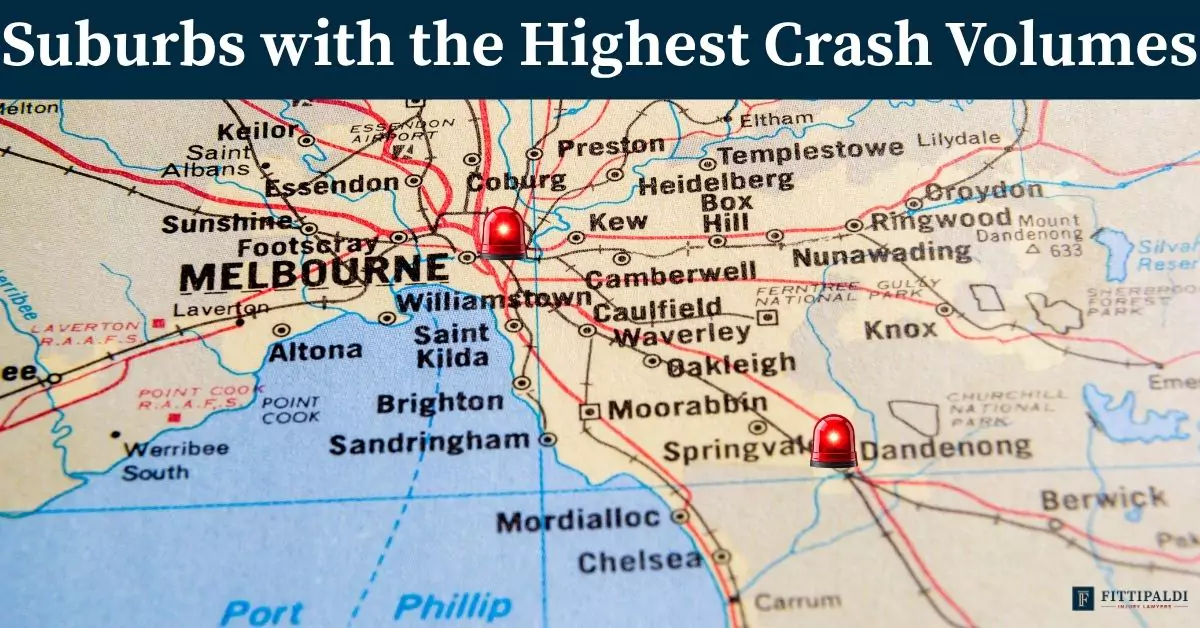
- The Melbourne CBD intersection at Collins and Spencer Streets remains a crash hotspot – thousands of pedestrians and vehicles converge daily, creating a constant danger.
- The West Gate Freeway and CityLink junction ranks among Melbourne’s deadliest freeway merges – high-speed traffic combined with complex lane changes equals trouble.
- Arterial roads in Dandenong, Sunshine, and Footscray saw increased crash rates – busy shopping strips where cars, trucks and pedestrians all compete for space.
- Richmond, Carlton, and Fitzroy recorded high pedestrian incident rates – narrow inner-city streets weren’t designed for today’s traffic volumes.
- Outer suburbs like Frankston and Cranbourne experienced above-average fatal crashes – longer commutes and higher speeds on main roads prove deadly.
- Intersections caused more than half of urban crash incidents – traffic lights and turning movements create multiple ways for things to go wrong.
These patterns make sense when you think about it. Collins and Spencer are chaotic at the best of times – add some rain or a broken traffic light and it becomes a nightmare.
Meanwhile, those outer suburban arterials feel safe until you realise everyone’s doing 70 in a 60 zone.
Time & Day Patterns for Accidents

- Peak rush hours (8-9 am and 5-6 pm) saw fewer serious crashes – being stuck in traffic jams is frustrating, but surprisingly protective.
- November recorded the highest monthly fatalities – spring racing, school formals, and increased social events take their toll.
- Public holidays and festive seasons consistently spike – Christmas and Easter periods see predictable increases.
- Wednesday to Friday afternoons see peak non-fatal crashes – work stress building up as the week drags on.
- School holiday periods exhibit different crash patterns – more family road trips result in increased regional crashes, while urban school-zone incidents decrease.
- Daylight saving transitions create temporary spikes – those first few weeks after the clocks change catch people off guard.
The timing patterns tell a story about how we live. Friday night crashes often involve alcohol. Sunday afternoon regional crashes? Tired families driving back from weekend getaways.
Leading Causes of Car Accidents
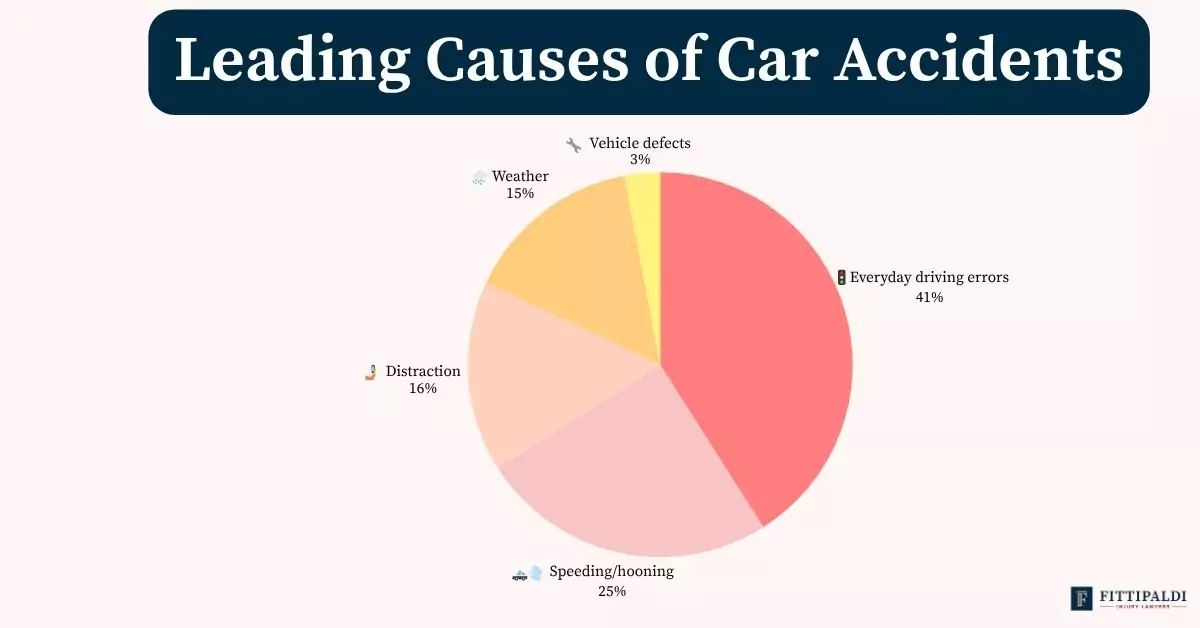
- Mobile phone distraction is a factor in around 16% of fatal incidents – Victoria’s new detection cameras aim to tackle this growing menace.
- Driver fatigue contributes to roughly one in five accidents – tired drivers can be just as dangerous as drunk ones.
- Basic errors, such as failing to give way or minor speeding, cause over half of fatal crashes – ordinary mistakes with extraordinary consequences.
- Extreme behaviours like drug driving and major speeding cause about 25% of deaths – the real hoons are still out there.
- Weather conditions factor into roughly 15% of serious crashes – Melbourne’s sudden downpours on hot days make roads treacherous.
- Vehicle defects contribute to about 3% of crashes – brake failures and tyre blowouts occasionally cause serious incidents.
The causes reveal an uncomfortable truth: most fatal crashes aren’t dramatic Hollywood scenarios. They’re regular people making split-second bad decisions and glancing at Instagram while stopped at lights. Doing 65 in a 60 zone because you’re late.
Injury Types and Medical Outcomes
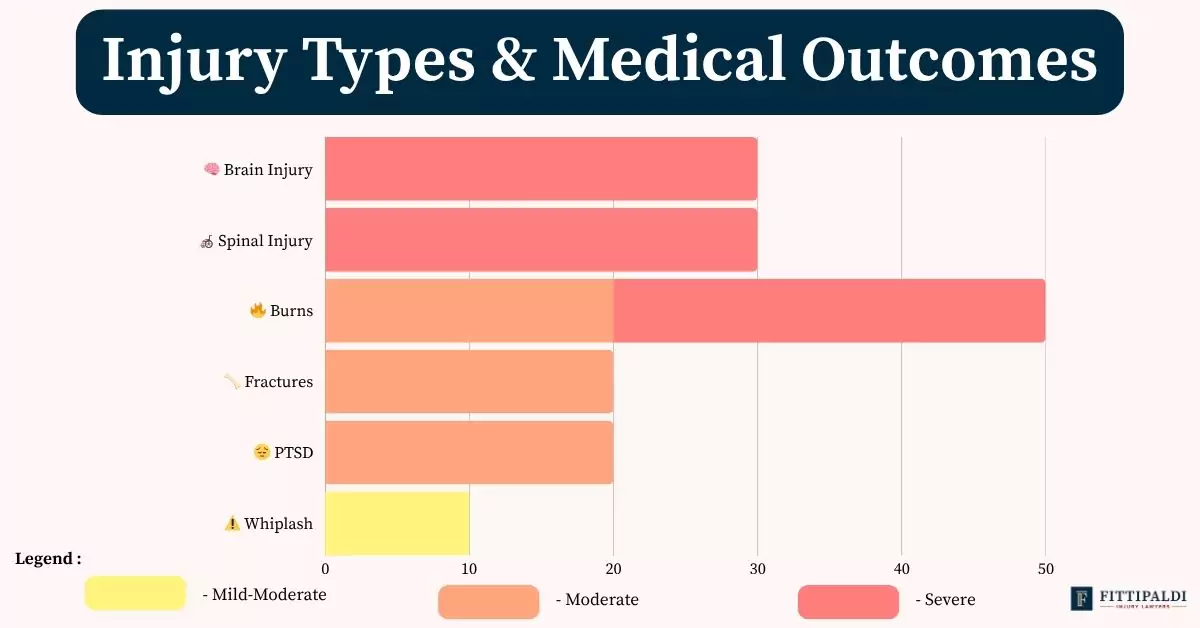
- Traumatic brain injuries represent the most devastating outcomes, affecting personality, memory, and independence for life.
- Spinal cord injuries occurred in roughly 8% of serious crashes, often meaning permanent paralysis and complete life restructuring.
- Multiple fractures require the most extended hospital stays, with complex healing processes that can stretch months beyond the initial treatment.
- Whiplash and soft tissue injuries affect most crash survivors – seemingly minor bumps often cause years of chronic pain.
- Burns from vehicle fires occurred in about 2% of serious crashes – rare but devastating when they happen.
- Psychological trauma affects virtually all crash survivors – PTSD, anxiety and depression frequently accompany physical injuries.
We’ve represented crash survivors, and the medical reality is brutal. Modern emergency medicine saves people who would have died 20 years ago, but they often face years of rehabilitation, multiple surgeries, and permanent changes to how they live.
TAC Claims and Payout Trends in Victoria

- The total economic cost of road crashes in Victoria runs into billions of dollars annually, including ambulance, hospital, police, and lost productivity expenses.
- Rising claims link to increasingly severe injuries rather than more minor incidents – modern cars prevent deaths, but serious injuries persist.
- Claims from motorcycle and pedestrian accidents have risen notably – vulnerable road users need more intensive medical intervention.
- Legal costs average $150,000 per serious injury claim, with complex cases often requiring specialist representation and the engagement of expert witnesses.
- Rehabilitation expenses often exceed initial medical treatment costs, including ongoing physiotherapy, occupational therapy, and psychological support.
- Home modification costs average $200,000 for wheelchair accessibility – spinal injury victims need extensive property adaptations.
- Lost income claims often exceed $1 million, particularly for young professionals who are unable to return to their careers.
These dollar figures might seem abstract, but behind every payout is someone whose life has been turned upside down. The 25-year-old tradie who will never work again. The mother of three who earns to navigate life in a wheelchair.
What The Experts Say
“Speeding, even at a low level, is dangerous – it increases both the likelihood of crashing and the severity of the crash outcome. Young drivers are, by definition, less experienced, so taking risks with speeding can have tragic consequences,” explains Tracey Slatter, CEO of the Transport Accident Commission.
The TAC CEO’s warning about young drivers and speeding connects directly to our statistics showing that one-third of fatalities involve drivers aged 17-25.
“Having a 100-kilometre-an-hour zone anywhere near a school is the definition of road-safety insanity – it’s disastrous for both pedestrians and vehicles travelling at wildly different speeds,” says Professor Stuart Newstead, Director of Monash University Accident Research Centre.
This infrastructure concern explains why regional roads prove so deadly. The combination of high speed limits and vulnerable road users creates exactly the dangerous mix Professor Newstead describes.
“Again, we have seen so many examples of simple and avoidable mistakes that have resulted in catastrophic outcomes. It is a stark reminder of the responsibilities we all have as road users, to keep ourselves, our passengers and all other road users safe,” notes Assistant Commissioner Glenn Weir from Victoria Police Road Policing Command.
Assistant Commissioner Weir’s observation perfectly captures what the data shows: over half of fatal crashes stem from ordinary errors rather than extreme behaviour.
What These Numbers Mean for Melbourne Drivers
These 47 statistics paint a confronting picture of Melbourne roads in 2025. We’ve made incredible progress from the carnage of previous decades, but recent trends should worry everyone who gets behind the wheel or steps onto our streets.
The patterns are crystal clear. Exercise extreme caution on country roads, especially at night or on weekends. Young blokes need to reconsider their relationship with risk seriously. Everyone needs to treat mobile phones like kryptonite while driving.
What’s most frustrating is how preventable most of these tragedies are. The 282 lives lost in 2024 represent thousands of family members, friends, and colleagues left behind. Every one of these statistics represents real people.
At Fittipaldi Injury Lawyers, we understand that if you or someone you know has been caught up in a road accident, you don’t have to figure out the legal stuff alone.
Our experienced car accident lawyers in Melbourne thoroughly understand TAC claims, insurance disputes, and compensation processes.
We can secure the support you need, allowing you to focus on healing and getting your life back on track.